Antigua Racing Cup 2027 | Put It on your Programme
Trade winds. Ocean swell. Technical courses. Proper competition. Antigua Racing Cup returns from 17–21 March 2027 with one clear aim—to deliver the racing that serious sailors come to the Caribbean for.
Antigua, West Indies: If you asked a racing sailor to sketch out the perfect regatta, it might look something like this: Warm trade winds in the high teens. Open-ocean swell rolling into Antigua’s south coast. Boats surfing downwind with warm Caribbean water coming across the deck. Technical courses. Proper competition. Plenty of races. Then back to historic Nelson’s Dockyard for happy hour, daily prize-givings, the grills firing up and plenty of discussion about who nailed the start, who found the shift and who got the better of whom.
And all of this in March—while much of the northern hemisphere is still scraping ice off the car.
For race teams building a serious Caribbean campaign in 2027, Antigua Racing Cup is making a straightforward case: put it on your programme.
Returning from 17–21 March for the second edition, the performance-focused regatta is designed around racing sailors. Technical courses, professional race management, racing tailored to different types of boats and the option to score under both CSA and IRC puts the emphasis firmly where it belongs—on the competition.
The inaugural edition in 2026 proved the concept works. Now the aim is to establish Antigua Racing Cup as a regular choice for international owners, skippers and programme managers deciding where to race in the Caribbean.
Steven Goddard’s Faenol
The South Coast Stadium
Antigua has something special to offer a racing sailor. The island sits on the outer curve of the Leeward Islands, between the Caribbean Sea and the Atlantic. Off the south coast there is little between the racecourse and thousands of miles of open ocean. The easterly trade winds arrive with room to breathe. So does the swell.
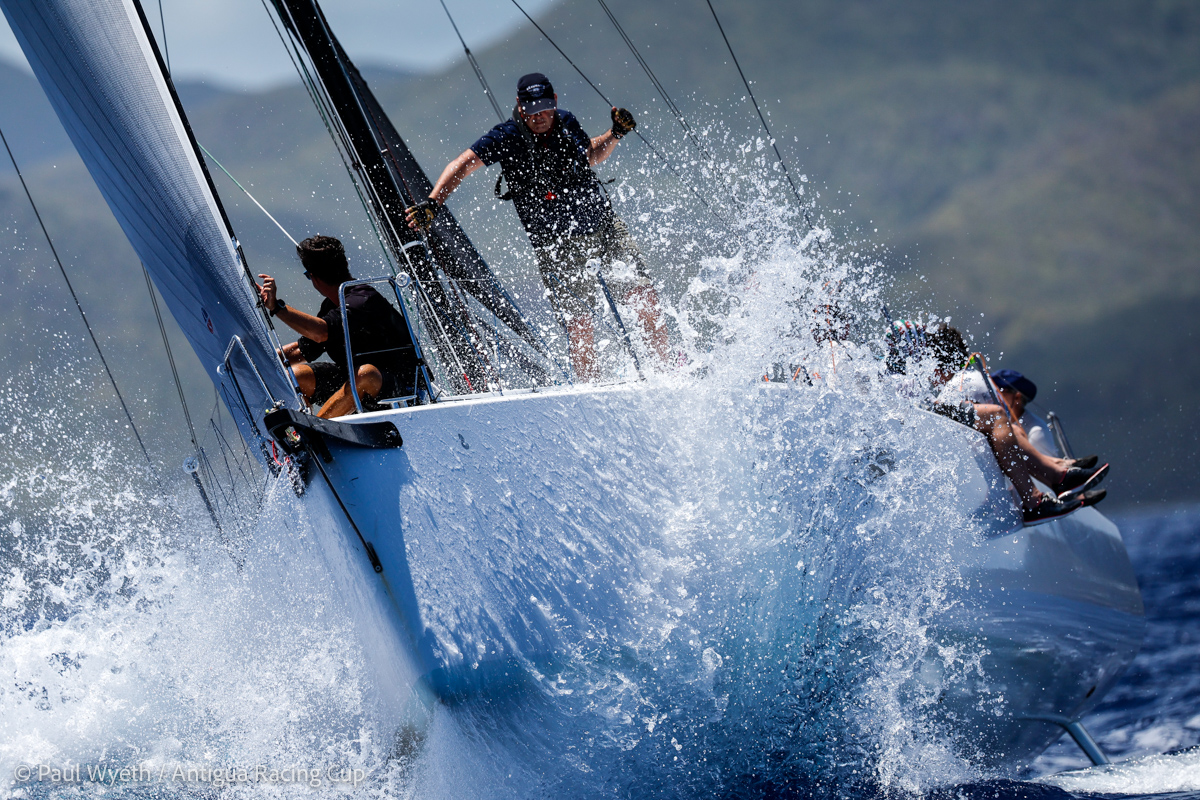
In March, the trades can regularly be in the high teens to twenties, while an open-ocean sea state of around one to two metres adds another dimension to the racing. Upwind, that means finding the fast mode through the waves. Turn the corner and boats accelerate onto the faces of the swell, with real opportunities to surf and the water coming over the deck is warm.
This is Caribbean racing with an ocean edge, yet the racecourse sits only a short distance from English Harbour. For sailors, that means less time motoring and more time racing.
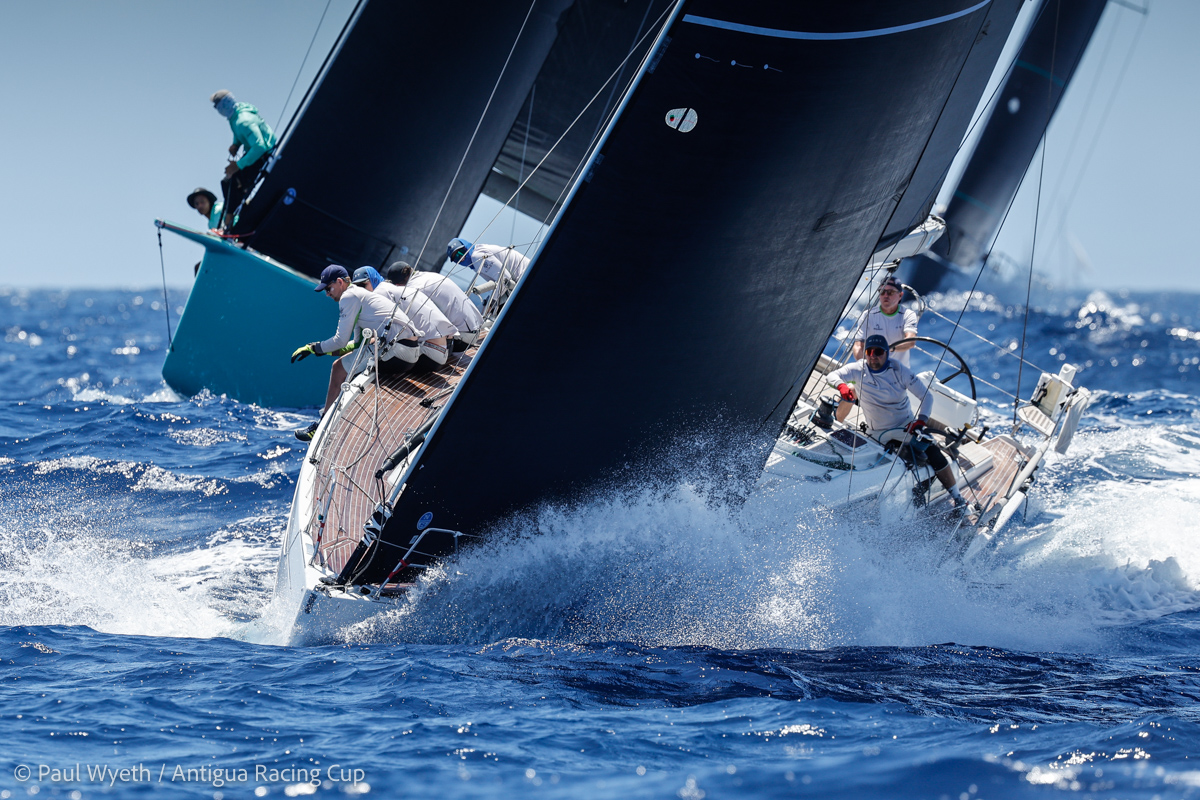
Belladonna and Warthog neck and neck in the inaugural Antigua Racing Cup
Racing designed for the boats
The racing itself follows the same philosophy. Rather than forcing every type of boat around an identical course, the Race Committee has the flexibility to set racing appropriate to the fleets.
For smaller performance boats, that can mean tight windward/leeward courses where starts, shifts, boat handling and crew work count. For larger yachts and offshore multihulls, longer courses can introduce reaching legs and different wind angles, allowing the boats to stretch their legs. Virtual marks provide another tool for the Race Committee to put the racecourse where the best sailing is.
The principle is simple: give racing sailors the sort of racing their boats were designed to do.
In 2026, 21 boats came to test that proposition. Eleven chose to dual-score under CSA and IRC. They got nine races, strong trade winds, tactical courses and some exceptionally close competition.
In CSA 2, Steve Rigby’s GS46 Belladonna and the Antiguan RP37 Warthog, skippered by Jules Mitchell, reached the end of the regatta tied on points. After nine races, Belladonna won the class on countback.
American Bruce Chafee’s Reichel/Pugh 42 Rikki added another dimension, finishing third under CSA while five race wins secured IRC 1.
That is exactly the sort of close racing Antigua Racing Cup wants.
The 2027 fleet is already beginning to take shape. Martin Zonnenberg’s J/111 Quickdraw will bring a proven campaign to Antigua, skippered by Scott MacGregor. Quickdraw has produced strong results in both one-design and offshore racing, including the J/111 Championships and the Newport Bermuda Race. A J/111 in the Antigua trade winds and open-ocean swell should be a potent combination, particularly when the course turns downwind.
There is also an important first for 2027, with Ossie Stewart’s Aeolus becoming the first Elite One Design entered for Antigua Racing Cup. Stewart is a former RS Elite UK National Champion and one of Britain’s most accomplished keelboat sailors, with more than 30 championship titles during a long racing career as well as an Olympic bronze medal.
There are already a significant number of Elite One Designs based in Antigua, and the ambition is for Aeolus to be the first of a growing one-design fleet. Close racing between identical boats fits perfectly with the Antigua Racing Cup philosophy: good sailors, proper courses and competition where every start, shift and manoeuvre counts.
Don’t take our word for it
The strongest validation comes from the people who raced it.
British sailor Josh Redgrave was part of the victorious Belladonna programme. His assessment was concise: “This is high level racing in the Caribbean.”
American owner Bruce Chafee arrived with Rikki having already competed in Antigua earlier in the season. What impressed him was the willingness of the race team to listen to competitors and deliver what sailors wanted. His verdict included “proper windward leewards and varied racing.”
Then there is the home view. Antiguan sailor Ashley Rhodes dominated CSA 4 with the Melges 24 Whiplash. Rhodes would like to see more sportsboats and performance yachts joining the action in 2027. His invitation could hardly be simpler: “Bring it.”
Make it part of the campaign
For 2027, Antigua Racing Cup has another major advantage—its place in the Caribbean calendar. Moving to 17–21 March puts the event into a natural sequence for boats already committed to racing in the region. The RORC Caribbean 600 starts from Antigua in February. The St. Maarten Heineken Regatta follows in early March. Antigua Racing Cup then runs from 17–21 March before the Caribbean season moves on towards the BVI Spring Regatta.
For any team that has already invested in getting a race boat and crew to the Caribbean, that raises a simple question: Why stop racing?
The introduction of the CSA Majors Trophy adds another competitive reason to keep going. The championship links the RORC Nelson’s Series, RORC Caribbean 600, St. Maarten Heineken Regatta, Antigua Racing Cup and BVI Spring Regatta, turning individual events into a genuine Caribbean campaign.
For European and North American programmes in particular, the March dates also allow teams to maximise their Caribbean racing before turning their attention back to the northern hemisphere season. Antigua Racing Cup does not have to be considered as an isolated regatta. It can simply become part of the programme.
Race hard. Then talk about it.
Once the racing finishes, Antigua Racing Cup changes gear—but the racing conversation certainly does not stop.
The entire event is based in historic Nelson’s Dockyard in English Harbour. Happy hour starts soon after racing, the grills fire up and the cold drinks come out as crews replay the day: the start they nailed—or didn’t—the shift they missed, the sail call that worked and the boat they just managed to hold out on corrected time.
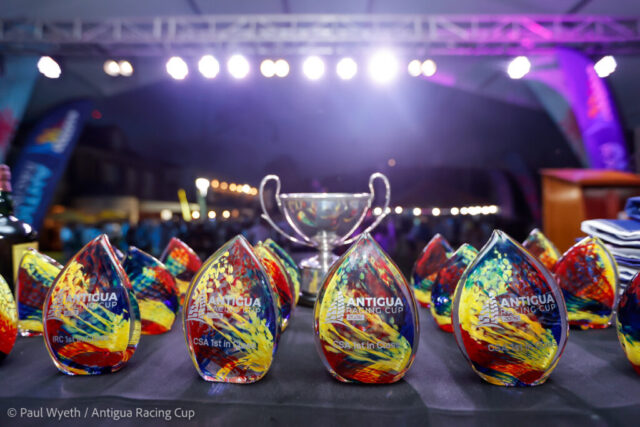
Then come the daily prize-givings. Race winners get their moment in the spotlight, with music rolling across the Dockyard and crews encouraged to enjoy the occasion and strut their stuff.
It is informal, lively and very much about the sailors. Owners, professional crews, Corinthian teams and local sailors are all in the same place, swapping stories while the boats are tied up only metres away.
That is the Antigua Racing Cup formula: serious racing offshore, easy-going Antigua ashore. Good sailors. Good boats. Proper courses. Strong trade winds. Ocean swell. Warm water. Then a few cold ones in Nelson’s Dockyard while the grills fire up, the prizes come out and the music starts.
If that sounds close to a racing sailor’s idea of the perfect regatta, that is very much the point.
For owners, skippers and programme managers putting together a 2027 Caribbean campaign, the message is straightforward: Put 17–21 March 2027 on the programme.
More information and online entry:
https://antiguaracingcup.nautical-cloud.com
The post Antigua Racing Cup 2027 | Put It on your Programme appeared first on Antigua Racing Cup.